
Chief Supply Chain Officer Career Path: How to Become a CSCO, Salary, and Leadership Traits
Introduction
Chief Supply Chain Officers (CSCOs) have gained prominence and importance during the last decade of global supply chain upheaval. From stock outs during the Pandemic to global conflict, strategic sourcing challenges, and trade wars, supply chains have had to withstand massive disruptions. The role of CSCO has also rapidly evolved to include more machine learning, savvy technicians as well as expert strategies and forecasts. The ability to parse the latest and greatest artificial intelligence strategies and platforms have also come to the forefront. However, soft skills like personnel management, succession planning, communication, and the ability to lead through challenging times remain the most common core competencies. This rapid evolution has made the chief supply chain officer career path more dynamic and competitive than ever before.
In this article, we explore the chief supply chain officer career path, including how top leaders progressed into the role and what it takes to get there. We’ll also talk to some supply chain thought leaders on how these roles have evolved over the course of the last decade.
Our objective is to help you define if your current professional trajectory is properly aligned with these supply chain leaders. For organizations evaluating their own leadership gaps, working with experienced and specialized supply chain recruiters can provide critical insight into how top CSCO talent is identified and developed.
Chief Supply Chain Officer Career Path: What it Takes to Reach the Top
These are highly educated and specialized individuals. Each of them possess advanced degrees or technical degrees (engineering and science) or business credentials which provide strong analytical foundations.
In addition to being highly credentialed and educated, one of the binding elements for the career arcs of these Chief Supply Chain Officers is cross-functional experience. Many of these leaders rotated across multiple supply chain verticals within the company where they ultimately became CSCO. This is a powerful predictor for whether you are on the right path. In fact, cross-functional experience is one of the strongest indicators of success along the chief supply chain officer career path.
For example, Chuck Graham worked in leadership roles in planning, manufacturing, strategy, procurement and logistics. He did this across a few different tech companies before becoming CSCO at Cisco.
Gretchen McCarthy’s career at Target moved from merchandising to inventory planning to supply chain transformation to logistics leadership before becoming CSCO.
Each leader mentioned in this article had to work across verticals before they could advance. Sure, you can work you way up into leadership positions within a single vertical, but that’s a limiting space. If you want to oversee an entire supply chain, you have to get your hands dirty ACROSS the entirety of the supply chain.
TIP: If you are serious about the chief supply chain officer career path, find a way to work in procurement, logistics, AND operations to accelerate your progression.
America’s Top Chief Supply Chain Officers
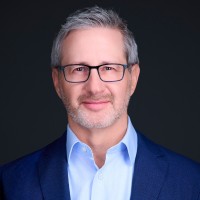
Chuck Graham – SVP & Chief Supply Chain Officer, Cisco
Leads Cisco’s global supply chain across sourcing, planning, manufacturing, logistics, quality and supply strategy.

Gretchen McCarthy – Chief Supply Chain and Logistics Officer, Target
Oversees global supply chain and logistics network for one of the largest U.S. retailers.

Chris Nielsen – EVP & Chief Supply Chain Officer, Toyota
Responsible for Toyota’s global supply chain and quality functions.

Luc Reynaert – Chief Product Supply Officer, Procter & Gamble
Leads product supply strategy, manufacturing and distribution on behalf of P&G’s global brands.

Willem Uijen – Chief Supply Chain & Operations Officer, Unilever
Heads Unilever’s global supply chain and operations organization.

Paul Gallagher – Chief Supply Chain Officer, General Mills
Leads supply chain for a major global food and consumer products company.

Patricia Gabriel – Chief Supply Chain Officer & Global Head of Operations, PVH Corp. (appointed late 2025)
Leads global supply chain across iconic fashion brands like Calvin Klein and Tommy Hilfiger.
————————————————————————————————————————-
Notable Execs who were CSCOs
Tim Cook (Former COO, Supply Chain Architect) – Apple Inc.
Before becoming CEO, Tim Cook built Apple’s modern global supply chain. While no longer CSCO, his path is arguably the most famous supply chain-to-CEO trajectory in history.
Gary Cooper – EVP, Global Supply Chain – PepsiCo
Oversees global manufacturing, logistics, and procurement. Background in operations and consumer packaged goods. Deep experience scaling multinational production networks. PepsiCo offers a classic CPG-to-CSCO career blueprint.
Brendan M. Bechtel – Chairman & CEO (Operations Lineage) – Bechtel Corporation
While CEO, Bechtel’s leadership pipeline heavily emphasizes supply chain and project logistics expertise at the executive level. Bechtel is a major feeder of global supply chain leaders due to megaproject procurement complexity.
Stacy Burr – Former VP Supply Chain Strategy – Nike, Inc.
Nike’s senior supply chain leaders frequently rotate across digital commerce, sourcing, and global distribution. Their CSCO-level executives typically come from strategy + global sourcing backgrounds.
Nike represents modern digitally integrated supply chain leadership.
Views from The Front Lines: Rodney Apple and Chris Gaffney

Supply chain talent expert Rodney Apple weighs in on how CSCOs have evolved over his 20 years in the field of supply chain talent management. Rodney is considered to be one of the thought leaders in supply chain talent with his extensive background in both corporate supply chain recruiting for Fortune 500 companies and agency work.
“I hear it all the time. The biggest gap at the CSCO level is the ability to deal with conflict and disruption while still moving the business forward. It comes down to problem solving and personnel management. These soft skills have become more important for supply chain leadership. You have to be able to stay out in front of things from a predictive standpoint; scenario planning and data usage and implementation are absolutely essential for success at this level of the supply chain. Being in tune with what’s happening across risk, global disruptions, and trade dynamics, and having the ability to quickly pivot are all qualities I’m seeing for Chief Supply Chain Officers. These are all operational qualities. Perhaps more importantly is the ability to bring your teams along with you through that. Digital transformation is a huge part of this. You are running the supply chain while you’re changing it at the same time. A lot of leaders struggle with that balance, but hte ones who stand out can operate in both worlds and make fast, informed decisions within a constantly shifting environment.
If you go back even to 2017, the core leadership traits were there, but what has really evolved is how you lead people. You are now working across different generations with different expectations, and you cannot use the same style for everyone. You have to be a dynamic leader who understands how to motivate, challenge, and develop people based on what drives them. It leans more toward a servant leadership model, away from the old carrot and stick approach. But it still requires accountability. The best organizations, like Les Schwab or Supply House, have proven that a people first mindset drives results. If you invest inf your people first, performance and profitability follow. Layer that with strong scenario planning, tech fluency, and a deep and broad understanding of the sandbox you’re operating in while constantly looking for a better way to advance the supply chain, and you start to see what separates good leaders from true CSCO-level talent.”

Chris Gaffney serves a dual role as Managing Director of the Supply Chain and Logistics Institute (SCL) and Academic Program Director for Georgia Tech Professional Education (GTPE) . He was most recently VP of Global Strategic Supply Chain at The Coca-Cola Company.
“When I think about what world class supply chain leadership really looks like, two individuals immediately come to mind: Ron Lewis, now CEO of Ball Corporation, and Dave Katz, who served as Chief Supply Chain Officer at Consolidated and is now COO. These are leaders who could have competed at any level of any organization. They combine high intellect with high integrity and they consistently built teams that performed because people respected them. They were tough minded when it came to standards and expectations, but how they led people is what truly set them apart. They leaned into positive reinforcement. When you were performing, you received support and recognition. When you were struggling, you got coaching, feedback, and development. You were not shown the door. That approach built on stronger teams over time and created leaders underneath them who were prepared to step up.
What also stands out about both of these leaders is how intentionally they developed breadth across the supply chain. They did not stay siloed. They moved across functions, stepped out of traditional supply chain roles to build new skills, and then came back with a more complete perspective. They understood every aspect of the supply chain, from operations to procurement to logistics, and just as importantly, they prioritized relationship management both internally and externally. The balance between functional expertise and the ability to lead across the enterprise is what elevated them. It is a reminder that the path to CSCO seat is rarely linear. The best leaders build cross-functional depth, invest in people and develop the kind of enterprise wide perspective that allows them to connect strategy to execution.
Career Path & Compensation Progression
No two paths to CSCO are identical. But there is a clear progression in both responsibility and compensation. What has changed in recent years is not the structure of the path, but the capabilities required at each level. The jump from execution to enterprise leadership is happening faster, and the expectations are higher.
Director Level (Emerging Enterprise Leader)
Typical Titles:
Director of Supply Chain, Director of Planning, Director of Logistics, Director of Procurement
Compensation:
-
Base: $150K – $220K
-
Bonus: 15% – 30%
Total Comp: $175K – $275K
What Defines This Level:
This is where high-potential talent begins to separate. Directors are still close to execution, but they are now expected to lead functions, not just manage processes. Ownership typically includes a specific vertical such as planning, sourcing, or distribution.
The key shift here is from doing the work → leading teams that do the work.
What Accelerates Advancement:
-
Cross-functional exposure (planning + procurement + ops)
-
Early adoption of analytics and digital tools
-
Ability to influence without authority
-
Delivering measurable operational improvements (cost, service, inventory)
Vice President Level (Enterprise Operator)
Typical Titles:
VP of Supply Chain, VP of Operations, VP of Global Logistics
Compensation:
-
Base: $220K – $375K
-
Bonus: 25% – 60%
-
Equity (select roles): $100K – $500K
Total Comp: $300K – $700K+
What Defines This Level:
This is the proving ground for the C-suite. VPs are responsible for end-to-end ownership across multiple functions and are often managing large teams across regions or business units.
The shift here is from functional leadership → integrated supply chain leadership.
This is also where many careers stall. The difference between a VP and a future CSCO comes down to:
-
Ability to think beyond their function
-
Comfort operating in ambiguity
-
Exposure to executive decision-making
What Accelerates Advancement:
-
Leading S&OP / IBP processes
-
Owning P&L-impacting decisions
-
Driving transformation initiatives (ERP, planning systems, automation)
-
Visibility with CEO, CFO, and Board-level stakeholders
Senior VP / EVP (CSCO Successor Pool)
Typical Titles:
SVP Supply Chain, EVP Operations, Global Head of Supply Chain
Compensation:
-
Base: $350K – $600K
-
Bonus: 40% – 100%
-
Equity: $500K – $3M+
Total Comp: $750K – $3M+
What Defines This Level:
This is the final step before the CSCO seat. Leaders at this level are already operating at enterprise scale and are often being evaluated as successors.
The shift here is from operator → enterprise strategist.
You are no longer just accountable for performance. You are expected to:
-
Shape long-term strategy
-
Lead large-scale transformation
-
Interface directly with investors, boards, and external partners
What Accelerates Advancement:
-
Leading global supply chains across regions
-
Proven success in transformation (digital, network redesign, restructuring)
-
Strong executive presence and communication
-
Ability to balance short-term execution with long-term strategy
Chief Supply Chain Officer (Enterprise Leader)
Compensation:
-
Base: $400K – $900K
-
Bonus: 50% – 120%
-
Equity: $1M – $10M+
Total Comp: $1.5M – $10M+ (and higher in top-tier companies)
What Defines This Level:
The CSCO is no longer just a supply chain leader. They are a business leader who happens to own the supply chain.
The shift here is from functional excellence → enterprise impact.
They are responsible for:
End-to-end supply chain strategy
Driving growth, not just efficiency
Leading through disruption and transformation
Aligning operations with commercial and financial goals
Conclusion
Across every step in this progression, the expectations evolve in a very specific way. Can you lead a function? Can you integrate the supply chain? Can you transform the business? Can you lead the enterprise through change? Rodney Apple and Chris Gaffney both insist that the servant leadership model has proven more effective for career acceleration in today’s supply chain world. However, the most important paths to assume for aspiring CSCOs is to ensure that you are working across every supply chain vertical you can. Do not silo yourself. Understand the strengths and weaknesses of your individual team members and understand how that particular person responds to feedback. Build up rather than tear down and develop as much technological fluency as you can along the way.
Whether you’re a prospective CSCO or looking to fill your next supply chain executive leadership role, you can’t do it by yourself. You need to rely on the steady hand of a supply chain talent professional to help your company find the best fit for your supply chain organization. Just as a wise CSCO is going to trust their team to do the jobs they hired them to do, you can also trust that a specialized recruiter can be left to do the heavy lifting of procuring a slate of candidates while you focus on the important work of running your business.

