Call Us Today! 1-877-236-0420

Supply Chain Careers Catalyst Podcast, Beyond the Resume, Proof over Polish

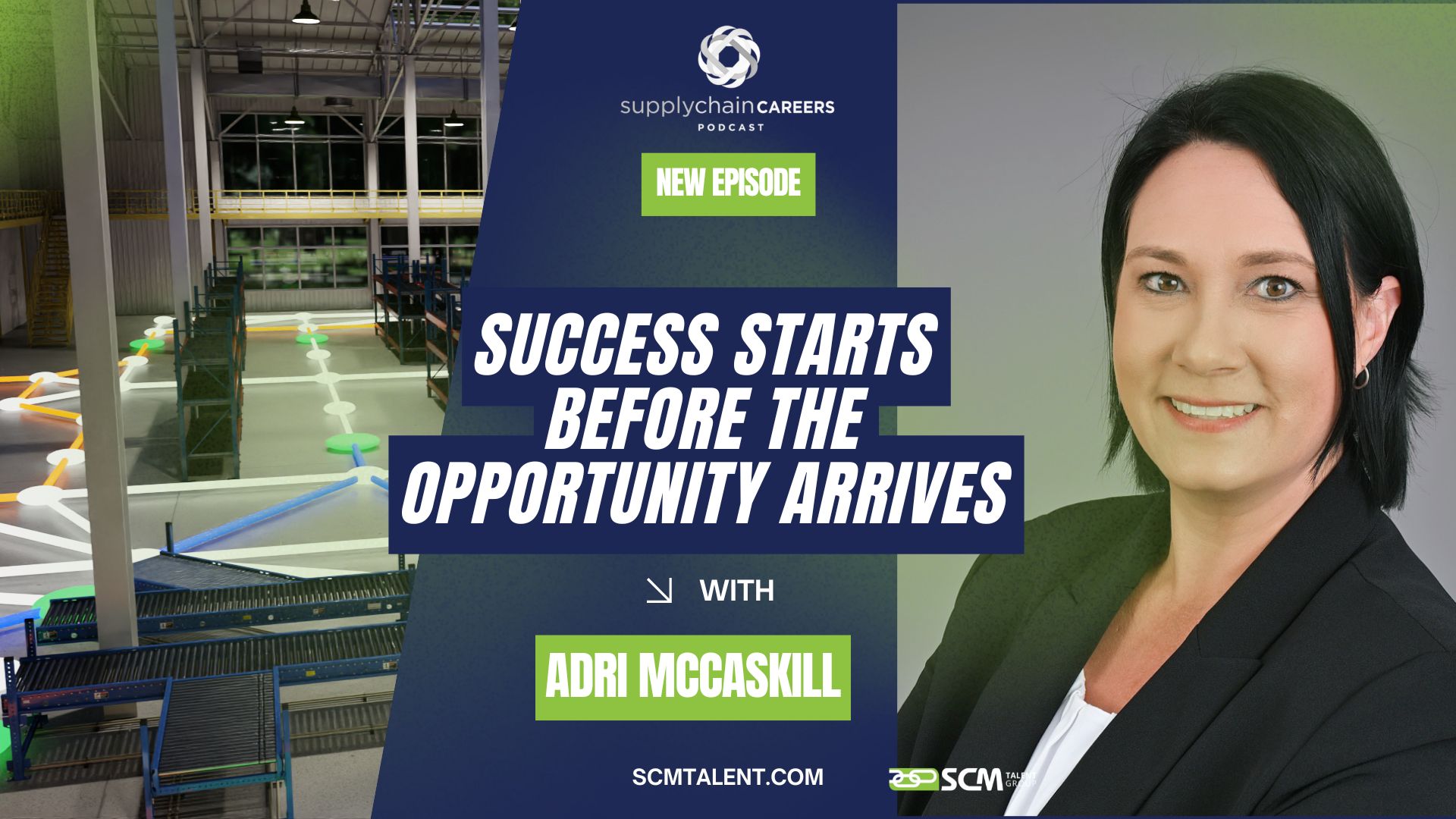
Supply Chain Careers Catalyst Podcast: Beyond the Resume, Part 1

By Published On: July 24, 2026

In the eighth episode of the Supply Chain Careers Podcast Catalyst Series, Rodney Apple and Chris Gaffney discuss why resumes and interviews alone are no longer enough to distinguish top talent. They explore how hiring managers are adapting to an AI-assisted recruiting landscape, why employers are placing greater emphasis on validating experience, and how professionals can proactively build a career portfolio that demonstrates credibility, leadership, and measurable business impact throughout their careers.

The New Competitive Advantage in Hiring: Proof Over Polish

Hiring has entered the age of proof.

AI has made it almost too easy to create polished resumes, customize cover letters, while anticipating interview questions and answers. These advances have created a lot of unnecessary noise in hiring by clouding qualified candidate pools with unqualified talent. Employers then have to struggle to wade through the AI infused assets to the genuinely qualified people (which can be more efficiently done using specialized supply chain talent pros, by the way.)

When every qualified candidate can present a compelling story, employers begin searching for something deeper: evidence. Evidence of leadership. Evidence of results. Evidence of judgment. Evidence of growth.

That is why the professionals who intentionally build a career portfolio are creating a meaningful competitive advantage in today’s hiring market. The most successful supply chain professionals build and maintain a professional profile in real time while only using AI to help compile a record of achievement.

AI Raised the Standard for Standing Out

Artificial intelligence has transformed the hiring process. Candidates can now generate polished resumes, tailor applications, and prepare for interviews in a fraction of the time it once required.

That efficiency has created a new challenge for employers. When several candidates appear equally qualified on paper, resumes alone no longer provide enough confidence to make a hiring decision. Employers are looking for additional evidence that validates experience, leadership potential, and long-term fit.

“The hiring manager now sees five perfect candidates and says, ‘I need other information to differentiate.'”

Chris compares today’s hiring process to modern supply chain planning. Just as planners use multiple demand signals to reduce uncertainty, hiring managers now rely on a broader range of information before making one of their most important business decisions.

Build Evidence Before You Need It

The strongest candidates don’t begin building a career portfolio when they start looking for a job. They’re building it every day with the work they do and they’re periodically documenting and compiling their achievements as they go.

Performance reviews, quantified accomplishments, project summaries, certifications, recommendations, speaking engagements, and thought leadership all become evidence of consistent performance over time. Together, they tell a much richer story than a resume ever could.

“You interview for your next job every single day.”

Rodney also encourages professionals to document measurable accomplishments as they happen. Cost savings, inventory improvements, service metrics, productivity gains, and successful transformations become much more powerful when they’re quantified and easily recalled years later.

Don’t just tell us what you did or list your responsibilities. Show us how you did it and the measurable impact of your work. A list of duties is merely a job description. Quantified and measured outcomes are the results of your work.

Authenticity Is Becoming the Ultimate Differentiator

As AI-generated resumes and interview preparation become commonplace, employers are adapting. More organizations are incorporating live problem solving, writing exercises, and behavioral interviews designed to reveal authentic thinking rather than polished presentation.

AI can help professionals communicate their experience more effectively, but it cannot replace experience itself.

“The authenticity piece is at a premium now. But you have to pack the gear. You can’t fake that.”

Whether through industry involvement, thought leadership, mentoring others, or consistently delivering measurable business results, professionals who invest in their reputation over time are creating an advantage that technology alone cannot replicate.

Final Thoughts

Resumes remain an essential part of the hiring process, but they are no longer enough to separate exceptional candidates from the rest of the field.

The professionals who consistently stand out are those who can demonstrate not only what they’ve done, but how they’ve led, learned, and created value throughout their careers.

In today’s hiring market, proof has become the new competitive advantage. It’s like the old timers always say: “I can show ya better than I can tell ya.” Don’t let AI do the talking; show your prospective employers how well you can do the job.


[00:00:00]

Rodney Apple: Welcome back to the Supply Chain Careers podcast. This is our Catalyst series. And today we’re gonna talk about an interesting topic that involves all the things you can do to create a competitive advantage when you’re interviewing for a new job.

A lot of job seekers make the mistake of thinking their resume and an interview is all they need to focus on, when in reality, if all things are equal between two or more candidates, it’s those extra things that you can put into your career portfolio that can give you a competitive advantage.

And I’m joined here with Chris Gaffney, and we look forward to getting into this today.

Chris Gaffney: Rodney, looking forward to the discussion. This is a part of the career process that’s changed dramatically in the last four or five years, whether you are a candidate or a hiring manager. The market’s changed, but the reality is the advent of AI, which on the one hand, everyone said, “Oh, this is gonna make this process much easier,” has in fact made [00:01:00] it much more difficult.

The kind of things that superficially would’ve been great, make my resume look great, instantly give me a bunch of information about this company so I’ll show up in an interview and look like I’m a perfect candidate, what you don’t realize is the hiring manager now sees five perfect candidates and says, “I need other information to differentiate and feel confident in the kind of decision I’m gonna make.”

So hopefully we’ll give good context for both sides of the coin in this discussion.

Rodney Apple: Absolutely, Chris, and we’re breaking this into a two-part series. Part one will focus on how top candidates can create a competitive advantage in this type of jar market, job market that Chris just described. In part two, we’re gonna get into references.

We’re gonna speak to both the employer’s perspective as well as the job seeker’s perspective. We still see a lot of mistakes being made. References along with assessments and other vetting exercises are becoming more important in light of what Chris just talked about with AI. So we’re gonna talk about tactics for [00:02:00] making sure you’re doing your very best when it comes to producing references as well as how to check them from the employer perspective.

Chris Gaffney: So kind of the first area that we wanna discuss is, the, the reality that if you’re an employer, hiring is a risk/reward equation. And as a hiring manager myself, I can think of examples where I felt like we were getting it all right, and six months later or 12 months later said, we really missed.”

And so my own humility about this process is very healthy in this day and age. And I think the main message for us is, yes, we wanna understand, is this person capable of doing the job, right? Are they technically qualified for the job? Then we also wanna understand are they a fit for this culture and this organization and this team?

Are they going to be additive? And, hiring is a big effort, and so then I wanna make sure that this person has runway, [00:03:00] right? I don’t wanna hire somebody who the role that we’re hiring for is the highest they’ll ever aspire to. We wanna build, into our succession pipeline and have a belief that someone can take steps with us.

So trying to conclude all of this from a resume, that now is completely polished and is very difficult to vet. Interviews themselves are extremely subjective. We’ve seen people who are just super polished in an interview, and that doesn’t translate into their day-to-day work environment.

So we need additional information, and I think, we’re talking about this in a supply chain context, and, I think it’s very analogous to the way we’re thinking about making supply chain decisions today. We’re trying to bring in more information, right? In, in the old days, our demand forecast was mostly informed by our demand last year, right?

And very gradually, we start bringing in a little more information to say this year’s not [00:04:00] necessarily gonna be a repeat of last year.” Now we see people saying how do I factor in weather? And how do I factor in my competitor’s performance? And how do I, factor in macroeconomic conditions?”

That’s what the hiring manager’s trying to do in today’s hiring process to have greater confidence that this big in commitment that they’re gonna make turns out well most of the time.

Rodney Apple: And that’s a good analogy, Chris. I think as we vet candidates to add value, we should take a maybe a bit of a similar approach to how we vet suppliers and their suppliers because we need to add value, and we need to manage the risk as well.

Reward risk, like you said earlier.

Chris Gaffney: Yeah. There’s no question about it. And, y- you know- The, the market is out there, and depending on what kind of roles you’re looking for, you’re gonna find plenty of candidates, and so that in and of itself doesn’t make the job any easier, as I said, ’cause you’ve gotta find a way to differentiate amongst those candidates.

And [00:05:00] then in the hard-to-fill roles, where you’re trying to look, at a very technical role or a very difficult marketing environment, or environment we’ve talked about, like manufacturing in a rural setting, that type of thing, you work hard to get the candidate, and then you’ve gotta make sure that they really pack the gear.

So you’ve gotta find a way to get up under the hood. That’s

Rodney Apple: right. Let’s talk about that the tactics and strategies that candidates can employ to differentiate themself in this job market.

Chris Gaffney: . I think when we think about this we’re gonna introduce this idea of a portfolio, and if you have friends who are in the fine arts business and you hear them, they carry around a physical portfolio of their work.

And when they walk in, they can physically put something on the table that says, “I did this. I can talk to you about my rationale, my process,” that… In the supply chain world, you don’t have that, okay? But the truth is, you have developed your [00:06:00] portfolio, from the time that you were in college and in your early career.

Everything that you would choose to put on the table when you’re presenting yourself as a candidate, your resume your LinkedIn profile, your footprint if someone– and they will search you digitally to say, “Where does this person show up?” So I think for our early career folks, the message is you are actually working on your po- portfolio every day.

And Stan Ellington, who we both know, used to say, “You interview for your next job every single day.” And I think that’s probably the biggest message I would have for candidates is you gotta chop wood every single day, and every meeting you show up to, every customer-supplier interaction is an opportunity for you to build something that can end up in your portfolio.

Rodney Apple: Exactly, Chris, and the obvious [00:07:00] one is having references, and we’re gonna get into that in part two of this series. But you need to go beyond the person that you work for. That’s the most critical person that employers are gonna wanna speak with, but think about peers, think about those that you’ve managed if you’re interviewing for a leadership role.

That’s a good perspective to have, especially if you’re able to develop someone or promote multiple people in your own organization. You’ve got customers in supply chain, and you also have suppliers and then you’ve got your internal stakeholders. Beyond that, you’ve got recommendations, letters of recommendation.

LinkedIn makes it super easy to initiate those reference requests to folks in your network, to employers that you’ve worked for, and so forth. Letters of recommendation are gonna be more of those written testimonials that you can ask for. You really need to ask for them if you’ve had a big success a big project that was successful that you completed or a transformation.

It’s really nice to get those accolades in writing so you can use them both for internal promotions [00:08:00] as well as external opportunities. Chris, you wanna speak to the importance of performance evaluations any kind of awards, recog- recognitions and other types of those accolades?

Chris Gaffney: Yeah, I’ll I think it’s important.

I am fortunate. I actually had breakfast last week with a boss I worked with 30 years ago, and I was very touched. He reached out and said, “Would love to catch up.” And I am thankful that I have a good relationship with everyone that I’ve ever worked with. And I think For our audience, this matters, right?

I– and there are plenty of bosses I worked with who it wasn’t, a bed of roses all the time, but it was a constructive relationship I developed. I listened, I learned, I took coaching, I c-took feedback, and in many of those cases, I got to a place where I could offer-

Rodney Apple: Yep …

Chris Gaffney: feedback. Those are the things that lead to the perspective that a, a manager, your boss, has of you that ends up in your performance [00:09:00] evaluation.

So again, I g-I get back to it for our audience is, y-you’re doing this all the time, and I think a, a, an underlying message for our discussion is we want you to be more intentional about how you’re putting points on that board in that, in that portfolio. It’s like a final exam in school.

The, the performance evaluation should not be a surprise, right? If you’ve been investing day in and day out in delivering in your role, and you’ve been proactive around seeking feedback along the way, A, you’re making it easier for your boss to, to calibrate with you. You can course-correct in Q1 or Q2 and not have to play huge catch-up.

So what shows up on that performance evaluation is gonna be good news in the near term, but it’s that long-term investment that boss would have no reservation vetting you, overtly reaching out for you, maybe calling you and saying, “I saw a job that you might wanna think about in a future state.”

So I think that’s [00:10:00] foundational. My hope is if you’re playing your game like that and you’re a clear team player, you’re investing, in your own team, and you’re going beyond that, these other accolades are gonna show up, right? That’s how you get that recognition that may show up from peer recognition or other more formal things, because the work you do and the way you do it is a differentiator in the here and now.

And when that shows up and you get to add it to your resume, it’s not just that I got the junior leader award when I was at this team. You can talk about, in, in a very sincere way, I wasn’t shooting for that award, but I’m very thankful that, I try to show up every day, make a difference, understand my role.

I understand the goal and what the company’s trying to accomplish. I’m not all about me. I’m about making the team successful. Th-that’s the story that the portfolio tells when somebody says, “I see you have this award on [00:11:00] your resume.” And then you’re really set up because you, you did the work,

Rodney Apple: exactly. And it goes back to you’re gonna have references. You’re, you don’t have to go out and Who am I gonna get that’s gonna speak positively on my behalf? If you’re doing these things, just like you said, Chris you’re gonna have those in spades, especially if you seek out ways beyond your job description to add value and to help others with their own jobs and accomplishing their goals.

That’s what true leadership is about. And you do these things right you don’t have to make these requests through LinkedIn. “Hey, I need a testimonial. I’ve got a big job interview coming up.” It’s a quick text or a call. “Hey, I’m gonna list you as my reference. Is you okay with that?” You always wanna confirm that.

And again, we’ll get in that to the next part two series. What about certifications? I love your perspectives. We’re familiar with all of these, these different supply chain associations and the educational programs and certifications that they offer.

What’s your take on that? And would love to hear about, [00:12:00] assessments or assessments come in many forms and flavors but you can also use those to your advantage when you’re on the job search.

Chris Gaffney: Yeah. So let’s talk about the certifications first. You and I have a mutual friend who’s getting ready to go get a PhD-

Rodney Apple: Right

Chris Gaffney: at least mid-career, and as we were talking about it with someone else, they were like, “Hey, he’s going to get the stripe.” And I said, the interesting thing is, I know this person I’ve talked a lot about has nothing to do with that.” This person is a true adult learner. They’re doing it in reverse, right?

They’ve got the practice, now they’re trying to translate that practice into a unique perspective. So they’re excited about their research and what they can add and give back to the field. So I think if you’re going after a certification, you wanna do it for every reason other than the fact that you want that on your resume, right?

Agreed. So you wanna have a clear view on and actually a curiosity to what you’re gonna learn, and a clear view on how you’re gonna be able to apply that, how I am going to be more effective. So if I’ve got that certification [00:13:00] on my resume and in my portfolio, it’s not the, “I went to Ohio State and I got supply chain certified.”

It’s, “Hey, I was fortunate to take this course, and when I came back, I worked with my manager, I talked about what I learned, and I said, ‘How can we apply that even either in my role or a special project?'” And I’m gonna demonstrate that I built capability by having the opportunity, either my company invested in that certification or I invested in it.
So I think that’s number one. I think number two, when you take these assessments, whether you take a self-assessment, and there are plenty of self-assessments you can take online- … or in a case when your company invested in that, it’s the same thing. It’s not to say when I take, the Hogan assessment or whatever, that I’m an XYZ and my friends know that they can describe me as this.

It’s like, wow, I took that and I learned something about myself that maybe was a blind spot, right? And I can remember early on when I took an assessment, it was a leadership assessment, and there was [00:14:00] one thing on there that was really highlighted, and it was about accountability. And I was like, “Oh, that’s really good.

I like to be accountable.” But it’s like, no, the fine print was, if you overuse this skillset, you can really go into a ditch, and I probably spent the next 15 years not understanding that I wasn’t careful about overusing that accountability issue. So learning from the assessment, and if somebody brings it up, you say, “Oh, you’re, you’ve taken these assessments.

What’d you learn from that, and how did you apply it?” So I think that’s how I think about those two things for sure.

Rodney Apple: Yeah, I agree. And I think, as, as we go back to how we opened up this conversation, it’s what are the things that will help you stand out when all things are equal on the resume and the interview experience that go beyond the obvious reveren- references.

And we’ve talked about quite a few but at the end of the day, supply chain is about enabling growth, it’s about adding value, and so you need to be able to, key word, quantify those accomplishments. So keep a log, however you [00:15:00] like to record your accomplishments throughout your career.

As Chris said, that starts early on in your c- career, and it becomes progressively more important as you advance, especially into bigger leadership roles. And in supply chain, we know it’s beyond cost savings, but you certainly want to quantify, I did X and here’s how it yielded Y in cost savings.

It’s not all about cost savings though, right? It’s inventory accuracy. It could be on time delivery and other service metrics, quality metrics. There’s safety of course, which is always very important. Productivity, revenue all of those things are on the table when it comes to supply chain, because supply chain impacts all of these areas and then some.

So save those accomplishments when you speak to them in interviews but you also wanna be able to quantify them using either dollar signs or percentages, right?

Chris Gaffney: Absolutely. It, a, a practical thing that we sh- go without saying here is you should keep all of your performance evaluations, right?

Yeah. I have had many folks when we were doing internal interviews for promotions, and we would ask about things, and they would not bring [00:16:00] something up, and I was like, “No, I worked with you on that project- Yeah … and that was much better than the example you used.” So you’ve gotta, this portfolio becomes a physical artifact, right?

So first things first, if you haven’t tracked down all of your performance evals make sure you’ve got a PDF of those on your personal computer, not on your work computer. And whether or not you choose to print them out, that’s your thing. But make sure you’ve got the artifacts there, ’cause it’s easy for your career to become a blur and you to forget something that was a big deal.

Now, inside of that, I always wanna make sure you can talk about, I learned very early on when I got into a role, beyond what was on the page of the job description, is to say, “How is our team judged?” What, and what do we deliver in terms of a process outcome, right? Service quality or whatever, at a cost or whatever, and how can I have an impact in that? And maybe early on in a role, you come in midyear or whatever, you’re not anchored well. But that first time you’re involved in, goal setting and performance setting, make [00:17:00] sure you can anchor. This is what I’m gonna be judged on this year.

This is what I can control and track and measure that. And you start that foundation to where you can differentiate that. And we talk about core role delivery, but this is also where in quantified accomplishments, you wanna be one of those people who is disciplined enough to get your day job done, but be available when the boss says, “We’ve got a special project.”

And so you can say, “Oh, and I added this special project. I was involved in this new software implementation. It was done on time. All the users got up to speed,” and/or was involved in an M&A. Now you’re really talking about a lot of meat on the bone in the quantified accomplishments kinda section.

Rodney Apple: That’s right.

And on a side note, super important, I still see candidates making this mistake with their resumes in this day and age, but, you’ve gotta list out the accomplishments beyond your job duties. If you just list out your job duties, others put in their accomplishments, and especially if they quantify the results, because that’s how you articulate the [00:18:00] value you’re gonna be perceived as a stronger candidate by default.

It should be obvious by now, but make sure you document accomplishments on your resume and quantify them, dollar signs, percentages. But don’t fluff the numbers, because anyone that’s really good at this, this experience will dig and dig. How did you get to that number? I wanna understand your logic and reasoning.”

So be able to speak to that. I have seen that backfire with candidates that sort of fudge the numbers. That sounds a little bit unrealistic. How’d you get to that?” And they’re, they stumble, and that’s the end of the interview at that point.

Chris Gaffney: Yeah. I think two things I’ll add to that. In anything you’re trying to articulate as part of this portfolio Particularly in the accomplishment sections, you wanna be able to talk about the what and the how of it.

Yeah. Right? Depending on the organization, they’re more interested, but at least go down the 50/50 path. This is what I was charged to do, this is what we were able to deliver, but this was my role. This is how I was able to bring that. So you can be very clear, particularly when you’re in a large organization or a [00:19:00] team, what you uniquely delivered in that space and,

Rodney Apple: and- And don’t take the credit for s- things that others did or way further down in the organization.

I’ve seen executives do that and that can backfire as well.

Chris Gaffney: Yep. And I think the other reality for us in this portfolio is you’re gonna leverage it a- as how you present yourself as a candidate, but when you show up in whatever interactions you need to study for the A, right? So you need to have gone back and refreshed yourself.

I’ve lived a lot of life I wanna make sure I’m comfortable that I can speak to all this, even if something was, five years ago.

Rodney Apple: And now with everything in the cloud, how do you memorialize this information and keep it up to date? And that’s up to you, how- however you like to organize information.

There’s plenty, Google Docs platforms like that. Keep it somewhere in one central place. I’d keep your resumes and other, those accolades, those letters of recommendation, store it all in one central place so it’s easy to access, easy to update. And to your point, Chris, easy to refresh your memory if you’ve been around for [00:20:00] 20, 30 years, or you need to go pull something that you did early on.

Yeah, Chris, and I wanna circle back to AI because with a click of a prompt and a button, it’s easy to generate anything really.

But you’ve gotta keep it accurate and you’ve gotta keep it valid, and you can’t fluff things, right? I have seen executives do this without AI, right? Inflated references of course, lying about things in their resume or in the job interview. But anything you wanna speak to is a watch-out for job seekers as well as employers.

Chris Gaffney: Yep. A, a very large company who any of our listeners would be familiar with w- has been using up to this year a process for many years where they ask potential candidates to work on a code sample or something like that. They gave them a problem. And what they– what I heard from them this year is they scrapped that because in past years, let’s say up until 2024, [00:21:00] you had a spread in terms of how people come back in terms of evaluating.

And what they would say is all of a sudden, late last year, 2025 into 2026, everybody walked in with a perfect code sample. It all graded out at 100. And so they basically said, “That doesn’t work anymore.” And so what you have seen employers do, this is what a, a, a fundamental issue for us and why we’re talking about this, is they’re coming back to analog steps.

They’ll walk into an interview, and they’ll have a traditional interactive interview. They’re gonna ask you, talk about situations where you demonstrated something, and then they may put you in a room with a piece of paper and a pencil and saying, “I need a written– I need a s- a sample of your writing.”

Or, “I’m gonna then give you, o- one in- one page out of a Blue Book exam.” And you said you’re a very effective Python coder, where I’m gonna need you to give me your logic. And that’s what people need to be prepared for because that’s where we’re headed. Okay? And the people who are capable will knock that out of the park [00:22:00] and will differentiate even more.

But if that’s not where you are today, this, this discussion that we’re having and you listening to it is a call to action, right? I think the authenticity piece is at a premium now. But you have to pa- pack the gear. You can’t fake that.

Rodney Apple: That’s right. That’s right. Yeah, AI is good for supporting and learning, but you can’t let it do the work for you or let it do the talking for you without that validation.

So Chris we’re sitting here in a podcast, right? And you and I have been doing this for five years or so, and well over 150 episodes. Thought leadership, personal branding. Would love your perspectives on doing this as a candidate or more so as a professional, just to help yourself stand out.

Chris Gaffney: Yeah, again, this is another thing that I think is of greater importance today than I would’ve s- thought so five to seven years ago. Fundamentally, for me now, when I interact with students [00:23:00] and professionals, one of the things that I want to be able to distinguish is what is their level of critical thinking, and we teach that, we talk about it, and it is being degraded because of all of the digital influences in our life.

And no matter what your intellectual capabilities are overexposure to that kind of light can diminish your ability to think critically. So my counteraction to that is I want people to have a point of view or a perspective, which means you have to be able to intellectually develop that, you have to be able to defend that, and you have to be able to articulate that.

So for our candidates, that means I need you to be working on that on the job, okay? And so whereas people would shy away from the opportunity to write up a summary of a project, as part of a closeout or that type of thing, or a new software offer is out there and it, and a leader needs a [00:24:00] perspective on the three main players and a recommendation, and is this something that adds value for us, and should we potentially take this to an RFP?

W- write, write down a point of view on it. Do the research, lay it out, revisit that muscle that’s out there. So my number one point here is you’ve got to build this capability, and even if you say I used to be pretty good at this,” or, “When I was in a pinch in school, I could write a nice paper,” th- that’s a muscle that can atrophy.

So my first point is I want you to have a point of view. Then the question is what is the environment- … that you, you bring that to the table? Yes, in a work environment, but to our point, the world is becoming more competitive, and so my advocacy to our audience, either young in career, middle in career, is it’s time to be visible externally, okay?

And you can do that in many different ways.

Rodney Apple: Yeah, blogging was super popular [00:25:00] and it’s not quite as popular. We still generate and crank out articles all the time. Obviously we’re on this podcast. You can be a guest on a podcast. Sometimes if you’ve got a good story, you’ve got a good project that you’d like to share with the world you can reach out to podcast and see if they have– We have those come up from time to time for our own podcast here.

Industry publications, right? There’s a ton of trade magazines. I have big stacks of those laying around here in the office. And case studies you mentioned software implementation, so those, those white papers and case studies can be very powerful in terms of sharing your own perspectives.

And webinars, right? We’ve done some of those recently as well. And speaking at conferences at these big trade shows, ASCM, CSCMP, ISM, MODEX there’s a whole slew of them. It’s great ways to not only share your perspectives and point of views, right? But to get your name out there, to network.

There’s a ton of side benefits that it can occur. And then if you’ve got something [00:26:00] published across these different formats as employers, and they often do do these, these kind of behind the scenes background checks where they’re trying to find information they can find it, and you can also proactively share it in an interview s- situation.

Chris Gaffney: Yeah I would say O- our underlying theme for this discussion is differentiation. And so our audience is saying, “How do I stand out?” And some people would say, “Why do I need to do all of this stuff,” right? I just think the world has changed, right? It has. I think your fundamental motivation in this area in terms of thought leadership and your professional brand should be first and foremost personal, right?

I am, I am trying to invest in my own career as a supply chain professional. Being, thoughtful about a topic I have passion about, carrier performance or supplier reliability or whatever. At a certain point, I want you to go beyond just having a superficial point of view, it’s shown [00:27:00] up in lunch conversations where it’s like, “No, I want you to put that down on paper. What do you think? What do you believe? Why, it- why is this important? And if you wanna make a difference, how would you do that?” Do it for yourself first, right? Your– hopefully your employer will benefit from that because you’re gonna translate that into, “Hey, I’m gonna try to bring continuous improvement ideas into my my organization.

I’m t- gonna try to influence the thinking based on where I am and maybe ultimately influence our strategy,” that type of thing. So back to the intrinsic motivation for it, do it for those reasons, and then put it out there, right? In, in today’s world I’d probably say if I was my younger self, I’d start my own substack, and I would start putting stuff on that, and maybe my mother would read it, okay?

I’m being facetious. But over time, someone may say what’s your point of view on something?” This is my point of view, and I’ve written about it.” And, you might have one follower, but ultimately over time, I think there’s just goodness in that.

Rodney Apple: I agree 100%. And it’s easy to start, and if you put it in a place [00:28:00] that’s more public it’s portable as you move from employer to employer as well.

Chris we should talk about some of the more advanced differentiators and segment this by like leadership, right? If you’re a people leader, there’s gonna be some things that are different than an individual contributor, right? And then you’ve got functional expertise, right? You might be on the customer side of supply chain, you could be on the vendor side with procurement project management- Yeah

and things like that. So how would you wanna think about that from a differentiation perspective?

Chris Gaffney: Yeah, let’s talk about it first if you’re a leader of others, right? I would say for me, my greatest accomplishment is I can probably list, 10 people who work for me who have become chief supply chain officers, right?

It’s probably greater than any actual accomplishment I ever made, and I never became a chief supply chain officer. So I feel good that I was a really good backup quarterback, and a lot of the people I know all went to play D1 and some went into the NFL. So I, I– but I think that’s great. I think if you’re [00:29:00] far enough along and you’re interviewing for a leadership position, and you have the opportunity to say “Not only can I give you access to people I, I worked for, but if you want, I can give you access to people who work for me,” right?

“And they don’t work at a particular company anymore. But if you wanna understand how I lead I have a long list of people who I have no, no issue with you talking to,” and then you’re just out there, right? I think that sends a message, for somebody particularly looking for an enterprise leader that’s out there.

But I do think it’s it’s at that point when you’re interviewing for those, again, leader of leaders kind of roles, they wanna understand how you lead large organizations. So they wanna understand your strategy around development and your ability to demonstrate that’s, turned into benefit, right?

They wanna understand your strategy around succession planning, and again, how you brought that to life. I think that type of thing makes a huge difference, and you do lots of these searches, so I’d be curious your take on that as well.

Rodney Apple: Yeah, 100%. A lot of the searches that we receive [00:30:00] at the executive level are confidential replacements, and it goes back to the heart of leadership.

And just kicked one off yesterday, and the plant’s running great, plant’s running fine but there’s friction between the general manager. This person’s worked in every function of the plant, knows it all and that’s the problem. The person makes all the decisions, and they don’t involve their subordinates they don’t listen to the folks on the shop floor, and that has become a problem.

We’ve tried to coach, we’ve intervened, we’ve done all we can. The person’s last day will be Friday. So that’s just one example that’s fresh in the mind. But you’re right, it’s leading is very multidimensional, and how you treat the person on the, the ground floor can come back to bite you at some point in your career.

I would say how you speak up to, to the board and how you show up in the community. These are some– Some of these people are in very big roles and they’re leading and orchestrating across large operations, and again, multidimensional Lots of facets comes [00:31:00] into play. The promotion of others, succession planning influencing stakeholders, leading through cha- transformation and change.

It’s all multidimensional and it’s up to employers to, to not just look at performance on the team, but look at it across the organization and then externally with customers and suppliers as well.

Chris Gaffney: Yep. Yeah, I think if you’re a functional expert, there are some different tactics that are also super important.

If I think about when I led the transportation team at Coke North America, I had the opportunity to sit on McDonald’s Transportation Council, and I did that for probably five years. And so it was people from the McDonald’s system, other suppliers, and they had academics involved and they sincerely wanted input from that community as they evolved their own strategy.

So that was super for me from a relationship standpoint investing in that customer, meeting lots of people. The after effect of that is probably 10 more people I could say, “If you wanna vet my [00:32:00] capability from a transportation standpoint be-beyond me saying I played a role with a very large customer, here’s five people you could talk to,” so I think that’s important. I think if you’re a technical expert, like if you’re in quality or you’re in safety,

Rodney Apple: Engineering.

Chris Gaffney: Yep, and/or engineering, I think investing in an industry association and being actively involved in setting or evolving standards- … that type of thing is super impactful.

I think those same people, how you managed your supplier and vendor relationships, “Hey, these people were really tough. They wanted best price, but they were always focused on getting the spec right and ensuring quality. They managed things the right way.” Those kind of things communicate well.

But the reality is, all of those things I just talked about for functional experts are potential career path expanders in the future anyway. So there’s a lot of reasons why, for a functional expert, you need to get a little bit outside of your own company environment to build, build these shoulders out.[00:33:00]

Rodney Apple: Exactly. And if you tie it all back together too, it goes back to enabling growth adding value and, you come into a role goals, objectives are assigned and then what happens afterwards? So being able to articulate all of this, all these things that we’ve talked about is super important.

That career portfolio, however you wanna organize it is equally important ’cause you’ve gotta be able to articulate it. You gotta be able to not just walk the talk, but talk the walk really. Anything else to add on this, Chris?

Chris Gaffney: Yeah. I think one of the things that I think is an investment that you have to make in this portfolio is a, a kind of a compendium of a lot of the data sources that we’ve talked about to this point.

But I think you’ve gotta invest the time in building out your inventory of what we used to call them stars, right? It was that, that situational kind of demonstration of your capabilities. It’s not the only model used, but it’s still a model used in a lot of interview settings. And so what we want is for you to go through a full list [00:34:00] of, functional leadership, operational capabilities and say, “How can I document as many situations from my career where I had to demonstrate that capability?”

And literally write out the situation in a paragraph, write out the task that you were given, write out the three to five unique actions that you took and the result. Because when you’re preparing for that interview, that question could come up and we also need a, what if it… when it went wrong, right?

So we need a pro example and a con example. So if you’re really serious about this, you’re pulling back up those old performance assessments to remember those really good examples, and I’m not gonna say completely journaling your entire career- … but when something really cool happens or something really tough happens and you have to dig out from it, then you gotta invest at least quarterly in saying, “How do I update my inventory so I’ve got this available?”

Because we, as you and I know time and opportunity don’t match, right? And what you don’t wanna be is the greatest job in the world [00:35:00] has come up, and you’re not fully ready to tackle it. You don’t wanna miss it. So that’s the investment. And again, back to this being, one more over the top, the really well-prepared candidate has this ready

Rodney Apple: That’s r- that’s a great point, Chris and I would just add that so we’re talking about, like, how do you articulate this in a interview situation, and then, how do you put it up on your resume as well, right?

And I think the third dynamic is how do you showcase it across these different formats that we’ve talked about that goes beyond references. Because if you’re giving someone a reference if you’re putting something in a resume and then it’s a key component of the job, and then you’re able to validate that through the star format, here’s the action, the situation, the project, whatever it is.

Here was my actions and the result, and then you’ve got references that can validate that and testimonials and things like that. You’ve got pretty much all of the key pieces to the puzzle, and it’s gonna absolutely help you stand out amongst others, especially when all things are equal, when you look at the [00:36:00] backgrounds and experiences and skills.

Chris Gaffney: Yeah, it’s tough. I- if you’re in the market right now, you got some catch-up to do today, right? If you’re not in the market now, i- it- it’s still time to say, “This summer, while I’ve got a little time, a quiet time, whatever, how do I start investing in this? What’s my gap assessment around my current portfolio?

Do I have this stuff pulled together or not?” And get started on it- Yeah … because, the time you’ll need it may be sooner than you think.

Rodney Apple: You never know, right? Most people don’t anticipate that the pink slip is coming their way, but with layoffs and with the, the economy that we feel like we’ve been in for several years now, that’s unpredictable you just never know where you’re gonna need it, and it’s better to be proactive you have this ready to go.

You can deploy a job search strategy. And when you get into these situations with interviews, you’ve got all of these pieces to the puzzle or ingredients for success.

Yeah, so we’ll pull this back full circle, right? The career management system [00:37:00] is several things. You don’t need all of these pieces but I think the more you have, the broader the perspective, the broader the validation, the better.

But clearly, resumes, we know with AI, we can customize those around the jobs. In the old days, pre-AI, we would maybe have a master resume and then you could have different variations depending on the type of industry or the function that you’re vying for. So that’s a little bit easy to do, a lot easier to do with AI.

References keep that. It’s probably gonna be a dynamic list. You don’t wanna use the exact same references over and over. We do that ourselves when clients are investing our services and validating, so we have a multitude of references, and we try not to overuse them. Those letters of recommendations, if you’ve received any type of awards, recognition, obviously your performance reviews you wanna try to get copies of those and keep those separately.

You’ve got the certifications we talked about, any type of assessments that you’ve taken that would be relevant to the positions you’re applying to. We’ve got, of course, those list of [00:38:00] accomplishments. Make sure you quantify those results, dollar signs, percentages, and things like that. Obviously, promotions, we look for people that have a good, steady track record of moving up and taking on additional responsibilities.

Doesn’t need to be a linear type thing. You– Sometimes you grow broadly by moving into different functions. I’ve seen people take a step backwards to help take a bigger step forward in their career. Publications, media appearances, webinars, a podcast speaking engagements, and then those all-important projects or transformations that you’ve been a part of.

Anything else to add to that list?

Chris Gaffney: Yeah, I’d– I would add the star inventory for sure. I would also say, if I was involved on kind of a capstone project I’m making sure that I’ve kept the final project report just so I’ve got it. And then even for me, a sample of writing, in a business setting, right?

A really effective email, or if I had to deliver a white paper and/or, if I had to deliver a PowerPoint presentation, whatever, I’m keeping a few of my best [00:39:00] samples of that if somebody wants to see a sample of my work.

Rodney Apple: Great adds, Chris. And then the last thing is, the, my I don’t– My memory, I don’t know about you it’s not as good as it used to be.

And I would set a maybe a quarterly reminder recurring on your calendar just to create some time and space to take a look back and say, “Hey, what have I done this past quarter? Is there anything else I need to be adding?” This is a dynamic career management system portfolio that you need to keep updated, remind yourself.

Set a calendar reminder and just take some notes, add anything to it, and rinse and repeat as you go forward.

Chris Gaffney: Yeah, one more that I think is unconventional, but you’re always gonna get this, where are your development opportunities, right? And everybody wants to say I’m perfect.” And I think if you’ve maintained an inventory of kind of your developmental kind of steps up the ladder over the course of the years I think that indicates a lot of self-awareness, a lot of humility.

If you could say, as I [00:40:00] did early on in my career, I was not organized naturally. I worked really hard to develop a, an, a, a system to augment that. I’m a huge fan of Stephen Covey and David Allen. Did that, right? Self-awareness and blind spot, I worked on that, at a point in my career.

But if you have those list of three to four things and say, “Hey, today I’m still working on that overactive accountability thing,” then at least you’re equipped to answer that type of question if it shows up in an interview.

Rodney Apple: That’s a very good add. Yeah, ’cause life’s not perfect, work’s not perfect.

We’re gonna make mistakes, we’re gonna fail, we’re gonna fail forward. That’s how you learn. And those learning experiences and what are you doing to develop yourself and enhance those skills is equally as important as your accomplishments.

In closing we appreciate your time today. Thanks for listening. If you’ve liked this episode and find it helpful, please subscribe, share it with others that could benefit from this particular episode.

If you’re looking for some additional career impacting insights and advice, just head over to scmtalent.com. We’ve got a [00:41:00] plethora of resources out there that you can put to use for your own career. Thanks again for listening, and we’ll catch you on the next episode.

Need help hiring Supply Chain Leaders?

Connect with our recruiting team here at SCM Talent Group to elevate your team’s potential and secure the supply chain leadership talent your organization needs for future success!

Check Out Other Podcast Episodes:

Go to Top