
Category: Employers
Leading Through Change and Transformation: Supply Chain Leadership Series Ep 13
Listen to the 13th episode of our supply chain leadership podcast! Learn how to advance your career through leading change and transformation!

Director of Business Development Job Description
Director of Business Development This Director of Business Development job description will help you to better understand the position's needs and value. Growing a business, establishing new connections and finding opportunities is extremely important and that’s the true role of a Director of Business Development. People in this role are known for being great at fostering connections, yet they are also generous and know how to access the right connections that eventually help grow and expand your business. On top of that, the Director of Business Development is usually the face of your company for prospective partners. The director [...]

Why Supply Chain Transformations Fail
Introduction Supply Chain transformations fail because of poor planning. That's the most succinct and oversimplified way to put it. Historically in large and small companies, change and transformation were viewed as a periodic event. In many cases, businesses did not place a special focus or dedicate resources to manage the change as a structured event. Instead, they would muscle in and reactively deal with the impacts, issues, and challenges. In a few companies, an effort was made to intentionally deal with the change, invest in resources and skill sets to do it well. For those companies, the chance of [...]

Bare Minimum Mondays Reflects Gen Z Workplace Influence
Bare Minimum Mondays might pressure employers to accommodate Gen Z workers into the future - but maybe not as much in Supply Chain.

The Evolution of the HR Business Partner, with Mona Kelly
Listen to our 3rd Supply Chain Talent Building and Engagement Podcast Series Episode featuring Mona Kelly, Founder of Symmetry Coaching, LLC.

How to Write Job Descriptions That Attract Top Supply Chain Talent
INTRODUCTION Supply chain job descriptions can be the first weapon in your arsenal to attract top talent. The competition for top supply chain talent is fierce these days. Unfortunately, a lot of companies treat their job descriptions as a necessary evil instead of a strategic marketing tool. These companies have yet to learn that there’s a strong association between a company’s job postings and its brand image. In other words, posting bad job descriptions can have a negative impact on a company’s brand image and deter the best candidates from applying. The demand for top supply chain talent has [...]

Contract Staffing on the Rise in Supply Chains
Introduction Contract staffing offers the dynamic world of supply chain management solutions to problems that these organizations regularly struggle to solve by optimizing workforces to meet fluctuating consumer demands and disruptions. When you add in rapid technological advances and the need to quickly build capacity to handle these obstacles, rapid hiring practices become in-demand. Supply chain contract staffing emerges as a powerful solution to address these challenges efficiently. Understanding Supply Chain Talent Needs Supply chain contract staffing involves hiring temporary professionals on a contractual basis to fulfill specific roles and responsibilities within the supply chain function. These contract staff [...]

How to Attract and Manage Talent in the Supply Chain
Hiring trends in 2023 include employers that don't over-hire in response to rosy economic outlooks and employees who are pro active about their own gap analysis and growth. These tactics can reduce the need and impact for widespread layoffs that damage culture and engagement.
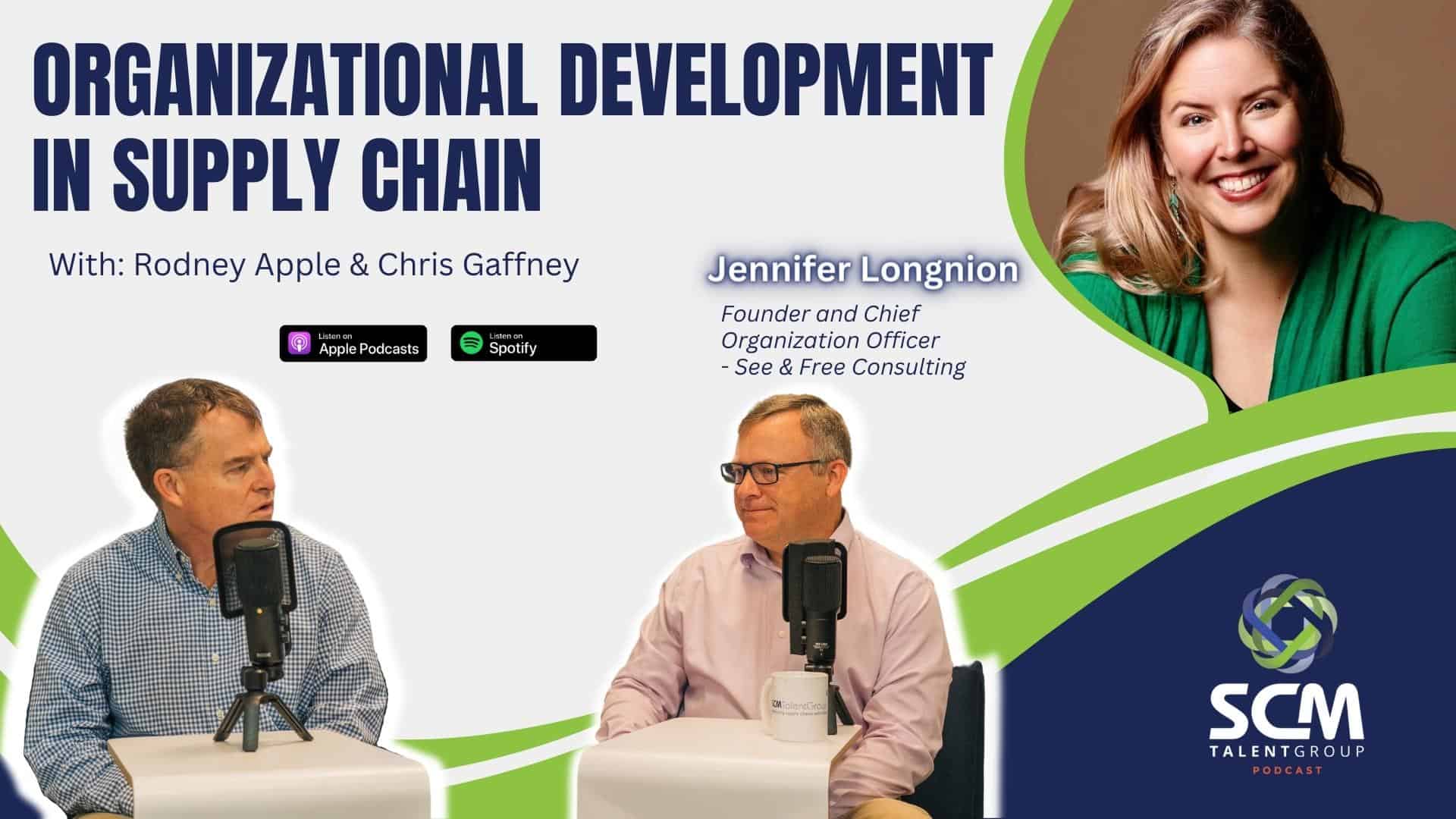
The Role of Organizational Development in Supply Chain, with Jennifer Longnion
Listen to our 2nd Supply Chain Talent Building and Engagement Podcast Series Episode featuring Jennifer Longnion, Founder and Chief Organization Officer of See and Free Consulting.
Become The Boss People Want To Work With: Supply Chain Leadership Series Ep 12
In this episode of our supply chain leadership podcast, listen and learn about what it takes to obtain your first manager position!
